WordPress / CMS Project
Korea Handbook
A content-heavy WordPress site for planning South Korea trips.
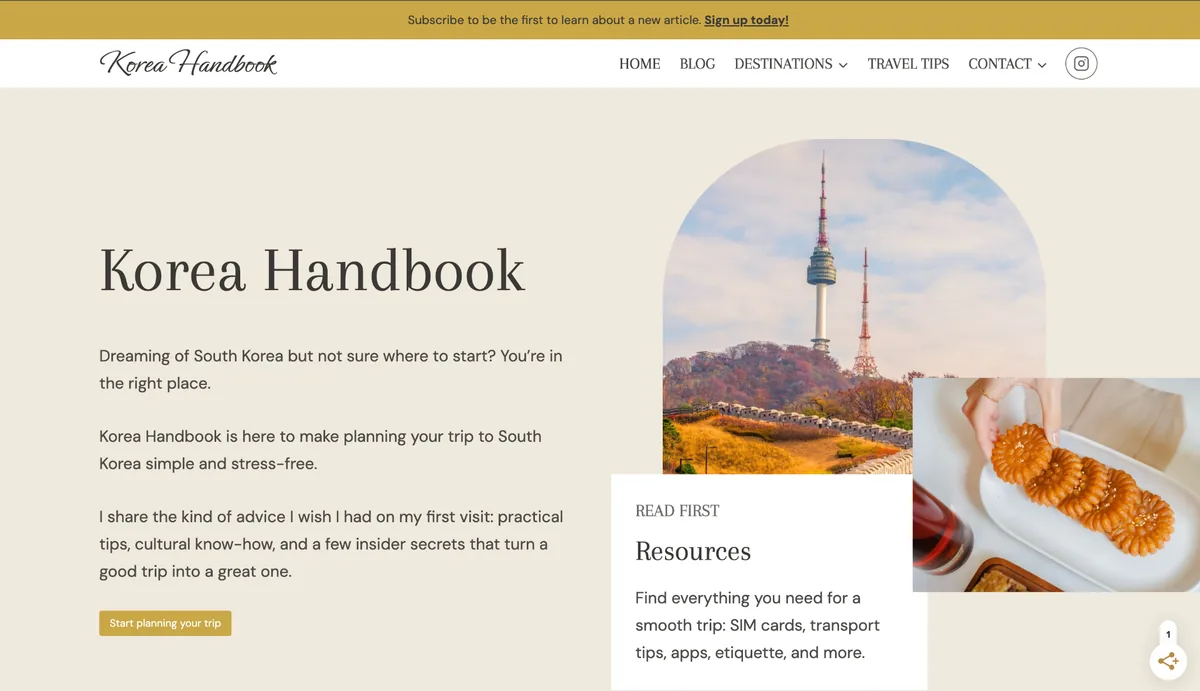
Overview
Korea Handbook is a WordPress travel site I built and run. It covers South Korea destinations, Seoul, Jeju Island, cultural advice, food guides, seasonal travel, and practical planning tips.
I manage it as an ongoing CMS project, so the structure had to be simple enough to maintain but clear enough for readers who are planning a real trip. The goal was to avoid the feeling of a random blog archive and give the site a stronger navigation system from the start.
The Problem
Destination sites can become hard to use when everything is published as a simple list of posts. Korea Handbook needed a structure that helps readers find travel tips, Seoul content, Jeju guides, food posts, and planning resources without guessing where to go next.
What I Built
- WordPress site for ongoing Korea travel publishing
- Navigation for Blog, Destinations, Seoul, Jeju Island, Travel Tips, and core pages
- Destination-led content structure
- Long-form guide layouts for mobile reading
- Internal links between related tips, destinations, and practical advice
- Homepage sections for planning resources, featured guides, new posts, and newsletter signup
Technical Approach
I used WordPress because the site needs an easy publishing workflow and a structure that can grow with the content library.
The navigation is based on what readers are trying to do: plan a trip, pick a destination, understand culture, find food ideas, or prepare for practical details like transport and etiquette.
What I Would Improve Next
I would keep improving destination landing pages, strengthen internal links between Seoul, Jeju, and travel tips, and review mobile readability and performance as the site grows.